 Respira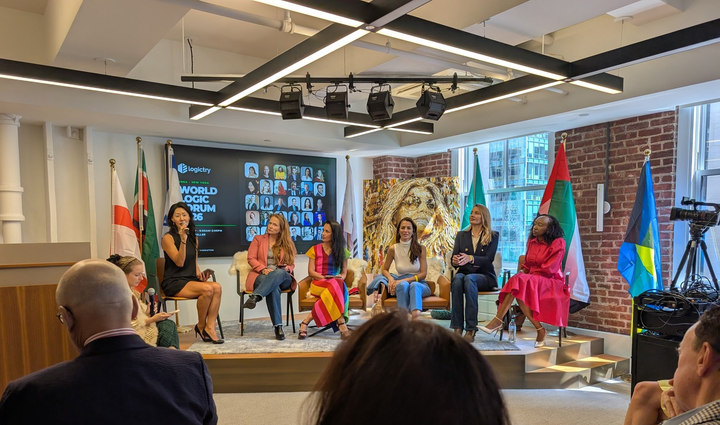
By Chelsea Toler
#ChelseaOnHerWay
There is a particular feeling in New York during UN General Assembly week.
You can feel the ambition in the streets.
Every hotel lobby seems to hold a head of state, a foundation president, an investor, an activist, a founder. There are motorcades on the avenues and conversations happening behind closed doors about the problems that will define the next century.
It is exhilarating.
And, if you pay attention, it is also revealing.
Because as I moved through the rooms of UNGA this year, I found myself thinking less about who was already at the table — and more about who will be sitting there next.
Who gets to shape the future?
That question has become increasingly personal to me.
My work is centered on the rising generation: the young leaders, inheritors, founders, philanthropists and changemakers who will eventually inherit enormous responsibility — but who, I believe, should not have to wait until then to begin carrying it.
So at Logictry's World Logic Forum, alongside UNGA, we deliberately created a different kind of room.
Not a “next generation only” room.
An intergenerational one.
A room where family offices, investors, philanthropists, experts and rising leaders could disagree, challenge assumptions and, hopefully, leave seeing something they hadn't seen before.
One conversation in particular has stayed with me.
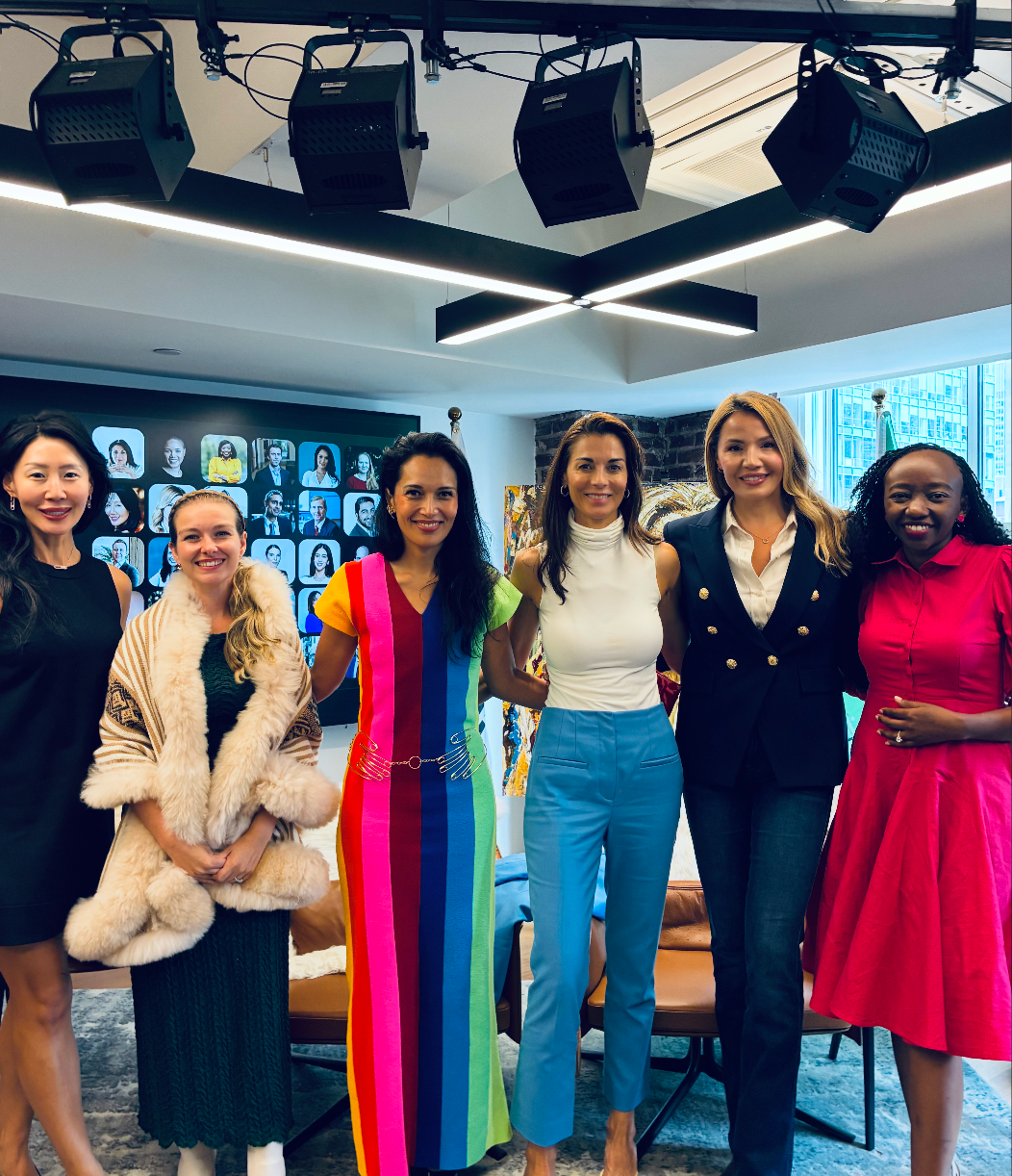
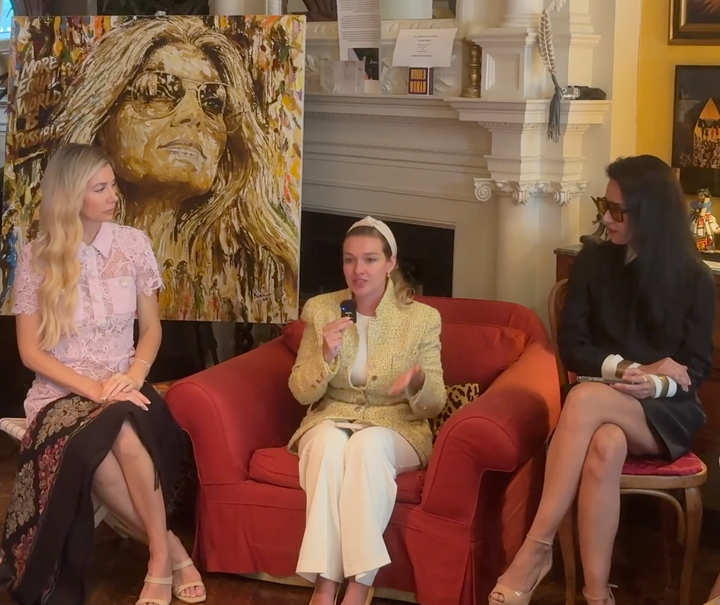
Kate Landon, Executive Director of the Ban Ki Moon Foundation, Bea Gasca, Board Member for Cherie Blair's Foundation and Ally for Gloria Steinem's Foundation, Patricia Silverstein, President of the Silverstein Dream Foundation, Sugie Hong Bruttomesso, Board Member of Silverstein Dream Foundation and World Logic Forum Co-Chair, Carrie Packin, Owner of Ascent and Board Member of Silverstein and Charlene Ruto, Daughter of the First Lady and President of Kenya sat together to talk about women, leadership, capital and the future.
Different backgrounds. Different generations. Different paths into influence.
But the same underlying question: What are we going to do with the power we have?
Patricia Silverstein, President of the Silverstein Dream Foundation, offered a line that I haven't stopped thinking about:
“My motivation is seeing how the impossible becomes possible.”
There is something deeply powerful about that idea.
Because change rarely begins when something is already possible.
It begins when someone is willing to imagine that it could be.
And then — this is the important part — put something behind that belief.
Charlene Ruto put it more directly: "Put your money where your mouth is and invest in the next generation."
I loved that.
Because we talk endlessly about impact. About purpose. About changing the world.
But eventually, leadership becomes tangible.
Where do you put your money?
Where do you put your time?
Who do you open a door for?
What do you fund?
What do you build?
What do you decide is worth betting on?
For the rising generation, those questions are becoming especially consequential as one of the largest transfers of wealth in history unfolds.
But wealth is not the only thing being inherited.
We are inheriting institutions. Technologies. Environmental challenges. Healthcare systems. Social movements. And the consequences — intended and unintended — of decisions made long before we entered the room.
Which brings me to the moment that may have stayed with me most.
At our Awards Brunch, Colleen from Amboy Street Ventures spoke about her own journey through finance and investing.
She said that it had taken her her whole career to find a community of women deploying capital like this one.
I looked around the room.
And I understood why.
There are many rooms where women gather.
There are many rooms where investors gather.
But there are far fewer rooms where women are gathered around the question of what happens when we actually reason together around global challenges and then work to deploy capital together toward the future we want to see.
That isn't networking.
That is infrastructure.
Community can be infrastructure.
A relationship can become an investment. An introduction can become a company. A conversation can become a foundation. And one woman seeing another woman make a bold decision can make her believe that she can make one too.
That is the power of seeing possibility embodied in someone else.
And perhaps that is why the intergenerational piece matters so much.
I don't want to create spaces where young people are simply told to “find their voice.”
I want them in rooms where they can use it.
I want a rising-generation leader to be able to challenge someone who has been doing this for forty years.
I want an inheritor to ask whether the way their family has always deployed capital is still the way it should be deployed.
I want an established philanthropist to hear an idea from a 25-year-old and think, I hadn't considered that.
Because sometimes the person with the least power in the room sees the problem most clearly.
And sometimes the person with decades of experience knows exactly which door to open.
We need both.
That was the thread running through so much of UNGA for me.
The future isn't waiting somewhere in the distance.
It is being negotiated, funded, built and imagined right now.
By women.
By rising generations.
By people who have inherited influence — and people who are creating it from scratch.
And I keep thinking about Gloria Steinem.
About the generations of women who fought to make rooms like these possible in the first place.
We inherit more than wealth.
We inherit possibility.
And then we have a responsibility to decide what we will do with it.
So as I leave New York, I am not leaving with a neat list of answers.
I'm leaving with better questions.
Who are we willing to trust with responsibility now — not someday?
What would happen if more women had access not just to capital, but to one another?
What could the rising generation build if we stopped preparing them for leadership and started giving them opportunities to lead?
And perhaps the question I keep coming back to:
What if “the next generation” isn't next at all?
What if they're already here?
I think they are.
I saw them in New York.
And they're on their way.
Las opiniones expresadas son responsabilidad de sus autoras y son absolutamente independientes a la postura y línea editorial de Opinión 51.


Comments ()